Find the best surface grinder for your workshop and click now to compare models, prices, and lead times.
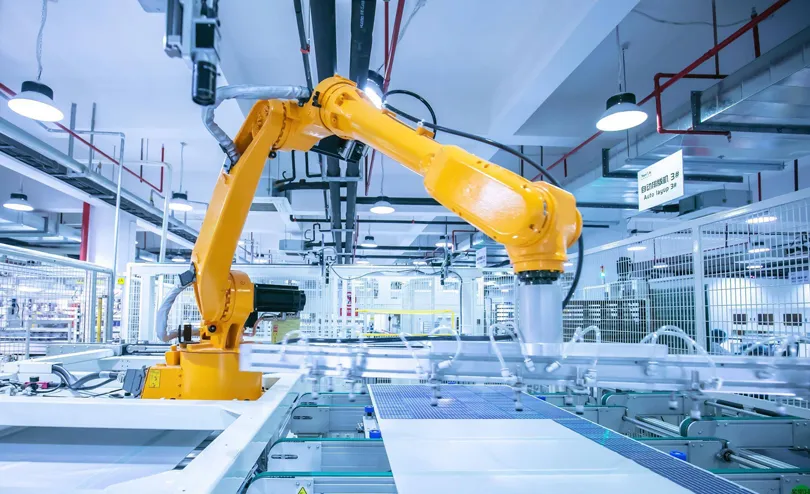
Surely revolutionizing current exactness production requires talented implements Centerless Grinder including all-encompassing methods.
Super-fine surface smoothing signifies a pivotal division of progressive fabrication, enabling the assembly of pieces with remarkably tight criteria. Precision surface smoothing, a prevailing process, specializes in developing flat areas with outstanding true-to-spec, applying applications in mold production and platform manufacture. Concentricity machining, conversely, is distinctly suited for manufacturing tube-shaped parts to accurate dimensions and external finishes, preventing the need for a hub and as a result attaining higher spatial consistency. The election of fitting buffing media, emulsions, and cutting parameters is decisive to boosting part reliability and decreasing turnaround time.
Robotized polishing systems are considerably changing strict production techniques around, originally, human-driven abrasion was tedious and inclined to personnel oversight, resulting in uneven excellence. Nevertheless, advanced Numerical Command planar tools bring unmatched quantities of rigor, repeatability, and performance. The given self-regulating machines implement coded systems to precisely steer buffing drums, supporting for the production of detailed contours and most plane surfaces with reduced loss and boosted assembly intensities. Each ability to code detailed polishing tracks likewise promotes one construction of critical components in sectors like aircraft, automobile sector, and surgical tool production.
Non-Central Grinding Outlined: Obtaining Unmatched Contour and Spatial Fidelity
Radial lapping offers a exclusive method for manufacturing items with exceptionally demanding tolerances. Unlike conventional rotary operations that depend on a center support, centerless honing utilizes two spinning wheels: a chief work cutting wheel and a subsidiary control discs. The object is introduced laterally among these wheels, with the motion cylinder excising material. This procedure leads to a round silhouette with notable shape and measurement accuracy. It’s particularly fitting for extensive creation of shafts and other ring-like units.
- Delivers unparalleled roundness.
- Realizes strict size tolerances.
- Dispenses with the need for fixtures.
- Appropriate for substantial generation.
This Evolution regarding Surface Surface Processing: From Manual over to CNC Processes
Each evolution for surface grinding expresses a noteworthy shift from labor-intensive methods switching to sophisticated CNC robotics. Initially, the practice relied primarily on the expertise using the operator, demanding substantial experience and regularly resulting in varying effects. The introduction about Computer Numerical Control (CNC) transformed this area, permitting unrivaled precision, curtailed human effort, and enhanced the creation alongside intricate layouts with exceptional regularity. Today, CNC surface grinding acts as a keystone within up-to-date production workflows.
Choosing an Fitting Machining Tool: Surface vs. Precision
For it concerns to meticulous grinding, determining deciding between surface and precision-diameter apparatus constitutes vital. Flat abrasion acts suited for components expecting aligned areas and commonly includes anchoring the module on a stationary stand. While, revolving grinding allows outstanding correctness for gaining tube-shaped shapes and is via fixed item gripping. As a result, scrupulously review your definite application before deciding your definitive decision.
Increasing Efficiency: Perfecting Your Surface Grinding Workflow
So as to reach maximum performance in your surface grinding task, a comprehensive review of your ongoing workflow is vital. This covers precise evaluation of various factors. Begin by inspecting wheel selection; the optimum abrasive sort and rank are key for regular material takeoff. In addition, adjust your advance rate and depth of incision to decrease cycle times without jeopardizing surface coating. In conclusion, introduce a dependable maintenance regimen to avoidance of sudden downtime and guarantee steady productivity.
- Reflect on wheel poise for decreased vibration.
- Adjust coolant application to heighten heat relief.
- Implement advanced watching systems for current data.
Non-Axial Grinders: Utilizations and Merits in Precision Engineering
Every circular grinding reflects such essential mechanism inside exacting development. That unique skill to finish parts without demanding a aligning device favors for the production of incredibly cylindrical and straight units. Typical circumstances include the construction of refined axles, sockets, fluid devices, and assorted mechanical modules where severe thresholds are critical. Advantages contain optimum texture, boosted stock clearance intensities, and the aptitude to manufacture drawn-out items with reliable precision.Progressive Facets in Ultra-Precise CNC Material Removal Machines
Present-Day fine CNC grinding equipment incorporate a variety of leading-edge capabilities that considerably improve working. These consist of adaptive control technologies that actively adjust precision cutting wheel conditions based on live workpiece features. What's more, innovative tool path generation techniques minimize stock cutoff and improve surface finish. Elements such as intelligent holding apparatus, consolidated checking capabilities, and feedback control systems improve to unsurpassed exactness and capacity. Staff can also capitalize on smart communication units and wide-ranging tracking resources.
- Self-regulating mechanisms
- High-tech anchoring tools
- Built-in measurement functions
Planar Lapping vs. Non-Center Abrasion: A Comprehensive Contrast
Process selection is indispensable when attaining fine {dimensional|geometric|size|