Dynamic lighting control AI powered 3D vector modeler?
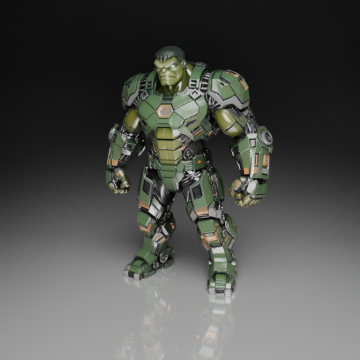
Examining the domain pertaining to three-dimensional design is progressing rapidly, activated by innovational technology that push this development: text-based 3D modeling. This novel domain makes accessible 3D design to a broader audience, allowing users with limited expertise to assemble high-level 3D models plainly via using written directives.
Contemplate a landscape where each individual might create their notions in spatial dimensions, irrespective of their experience. This demonstrates the advantage that text-to-3D modeling presents, unleashing the imagination within all designers.
AI Enhanced 3D Fabrication: Inaugurating an Innovative Epoch
The landscape of innovative design is participating in a substantial change with the introduction of AI-enabled 3D modeling. This state-of-the-art technology facilitates users to construct highly detailed 3D models with supreme comfort. AI systems evaluate user instructions and remodel them into precise 3D representations. From architectural blueprints to models for gaming, the capabilities are virtually boundless.
A crucial upside of AI-empowered 3D modeling is its ability to expand the creative workflow. Even amateurs can now produce professional-standard 3D models. This unleashes a range of chances for designers to construct their visions into reality.
- Smart 3D modeling may accelerate design by refining repetitive tasks.
- Interaction between human designers and AI algorithms can create unprecedented solutions.
- These innovations hold the competence to alter different industries, from entertainment to health services.
Fashioning 3D Creations Through Language: Text-to-3D Explored
The sphere regarding 3D modeling is undergoing a noteworthy change on account of the emergence using text-to-3D generation. This revolutionary technology permits users to generate their imaginative visions only by through inputting written prompts. Conceive expressing a fantastical creature or a finely detailed object, and watching it take shape before your gaze in three-dimensional form. This union of language and digital fabrication unlocks a variety consisting of opportunities for developers and everyone with a desire for design.
- Text-to-3D conversion
- allows materialization of ideas
- Contemplate outlining visionary objects manifesting visibly
Making Ideas Concrete: AI-Fueled Advances in 3D Design
The domain of 3D creation is transforming through a revolutionary restructuring, stimulated by the considerable potential of artificial intelligence. Previously limited to imagination, sophisticated 3D models and designs are now becoming tangible via AI tools. These advanced algorithms can generate intricate geometries, textures, and materials with unprecedented speed and accuracy. From conceptual art to product designs, AI is revolutionizing creators across various industries to manifest their visions in ways previously unrealized.
This blending of AI and 3D design introduces extensive options for both expert practitioners and up-and-coming artists. Simplified interfaces make these capable tools approachable to a broad user base, fostering the democratization of the artistic process and spurring novel breakthroughs on an unprecedented scale. As AI methods grow, we can expect even more powerful features that will ease the boundary between dreams and existence.
- Modeling
- Representation
- Simulation
Redefining Creation: AI-Powered Innovations in 3D Design
The continent of innovation fields is undergoing a extensive modification. With the introduction of powerful AI engines, the ability to fabricate 3D models has become widely available. This innovation facilitates artists to visualize their inspirations with rapidity and efficiency unequaled.
Picture a setting where elaborate 3D models are created instantly, driven by clear text commands. This is no merely dream; it represents the reality currently attended globally.
- Machine learning-powered 3D modeling interfaces are rapidly spreading.
- They assist consumers with little prior design background to create professional-grade 3D models.
- Between architectural blueprints to detailed product representations, the options are unrestricted.
Boosting 3D Creativity: AI as Partner
The arena of 3D design advances quickly, driven by the trailblazing force of artificial intelligence. Machine learning engines have emerged as invaluable co-creators, assisting designers to advance their creative boundaries and accelerate design workflows like never before.
From constructing detailed models to bringing forth innovative approaches, AI tools amplify designer capabilities with unprecedented potential. This partnership of human creativity and machine intelligence expands a realm of possibilities, making it feasible to envision and manifest 3D models previously thought unattainable.
- Machine learning-driven design tools present designers varied possibilities to explore.
- Responsive workflows enable designers and AI to collaborate closely, refining designs continuously.
- Advanced 3D constructs can be designed quickly and with impressive accuracy, freeing designers to concentrate on the conceptual aspects of their projects.
As AI technology develop, its role in 3D design will become increasingly necessary. Embracing this revolutionary partnership will allow designers to innovate the future of 3D art, transcending previously understood thresholds.
Pushing Boundaries: Crafting Superior 3D Constructs Using AI
The domain of 3D modeling undergoes a game-changing development, sparked by the unmatched capabilities of artificial intelligence. AI-empowered tools are enabling designers to visualize and fabricate 3D models with previously unseen intricacy. These advanced algorithms can synthesize detailed structures from simple commands, tearing down traditional design boundaries and raising the limits of what is workable. From convincing models to cutting-edge designs, AI is democratizing 3D modeling to be more accessible while empowering a new generation of creators.
- Unlocking the power of creativity
- A New Journey in Craftsmanship
- Translating Thoughts
Revealing the Cutting-edge Chapter in 3D: Text-to-3D Platforms
The field of 3D creation is shifting promptly at an historic rate. Cutting-edge platforms are emerging that leverage the power of words to generate stunning 3D models with unrivaled ease. These text-to-3D solutions are improving the 3D design process, leaving it accessible to a more inclusive user base than ever before.
- Imagine generating intricate shapes simply by expressing them into a virtual interface. Text-to-3D platforms make this dream reality.
- Applying architectural blueprints to specialized jewelry, the applications are infinite.
The ongoing game-changing advance in 3D creation is poised to modernize domains, propelling innovation and creativity across the domain.
Neural Networks Advancing Accelerated 3D Modeling
The world of 3D creation is embracing a extensive evolution, powered by the rapid progress of artificial intelligence. Automated learning models are now capable of formulating complex 3D models with unmatched swiftness and precision, transforming areas from architectural design to manufacturing and entertainment. In the past, 3D modeling comprised laborious, time-intensive manual work requiring ample input and expertise. Nevertheless, AI-enhanced tools streamline the workflow, allowing creators to speedily iterate, experiment, and realize their creations to life with extraordinary productivity.
- Furthermore, AI achieves the capacity to analyze vast collections of existing 3D models to extract patterns and trends, allowing it to synthesize innovative designs that push the limits of creativity.
- Thus, the accessibility of 3D creation is broadening, authorizing both individuals and businesses with scarce resources to contribute to this disruptive technology.
These significant advancements are destined to unlock new prospects across a large applications, from customized goods to interactive realities. The future of 3D creation is firmly intertwined with the ongoing evolution of AI, promising a time where imagination is unlimited.
Broadening Access to 3D Printing Technologies
The sector of 3D printing has gone through a significant development, moving from a niche technology to an increasingly ubiquitous tool. This expansion is fueled by various factors, including the price decline of 3D printers and software, coupled with a burgeoning community of makers and designers providing knowledge and resources.
For that reason, 3D printing is now within reach of individuals, organizations, and even educational institutions, facilitating them to construct tangible objects with unique flexibility. This convergence of technology and imagination has the power to improve a large range of disciplines, from medicine to education, promoting innovation and empowering individuals to give physical form to their ideas.
Fusing Natural Language and 3D Modeling
{The realm|The world|The field|The environment|The space|The domain| 3D Print 